
We’ve all put off something we know we need to do, and most of us have wondered, “Why do I procrastinate?” Maybe it’s starting an assignment, making an appointment, or cleaning the bathroom. Or maybe it’s the piece of admin that has sat on your to-do list for weeks.
You know that avoiding it won’t make the task disappear. You might even know that leaving it until later will make you more stressed. And yet you still find yourself reorganising your desk, checking your phone, or answering less important emails. Tomorrow starts to look like a better time to begin.
This post explains what is going on underneath that pattern. It covers:
- why avoiding a task feels like relief at first
- how the procrastination cycle keeps itself going
- five practical ways to break the cycle
- when procrastination needs more support
Why do I procrastinate?
Procrastination is mostly a way of escaping uncomfortable feelings. When a task brings up anxiety, self-doubt, boredom or overwhelm, putting it off gives you quick relief. That relief makes the habit easy to repeat.
However, there isn’t one single reason, and what makes you put something off can vary from person to person and from task to task. Think about a task you tend to avoid. How do you feel when you think about starting it? Perhaps you feel anxious, overwhelmed, bored, or unsure of yourself. Now consider what is going through your mind when those feelings show up. You might be thinking:
- “I don’t know where to start.”
- “What if I get it wrong?”
- “I need to do this properly.”
- “This is going to be so boring.”
These thoughts create discomfort. For example, worrying about getting something wrong can leave you anxious, while believing you need to do it perfectly can leave you pressured or overwhelmed. Expecting a tedious task can make you bored or frustrated before you’ve even begun. It’s natural to want to get away from discomfort. As a result, you might check your phone, switch to something easier, or promise yourself you’ll start tomorrow when you feel more motivated.
What creates the discomfort differs for everyone. Two people might put off the same report for completely different reasons. One worries their work won’t be good enough. The other expects the task to be boring and frustrating. Even for the same person, different tasks can bring up different thoughts and feelings.
Why does avoiding a task feel better at first?
When you put off a task that makes you uncomfortable, you usually feel better, at least for a little while. The anxiety settles, the boredom lifts, and maybe you even get something else on the list done. Researchers who study procrastination describe this as managing your mood in the short term, at the cost of your future self.
Your brain learns from that relief. Because it registers that avoiding the task is an effective way to escape discomfort, doing the same thing next time becomes tempting. That is a big part of the answer to “Why do I procrastinate?”
However, the relief rarely lasts. The task is still waiting, and now you may have less time to complete it. As deadlines close in or tasks pile up, your stress builds. You may also start criticising yourself for not starting earlier, which adds guilt and frustration to the discomfort that was already there. Together, these steps form a cycle:
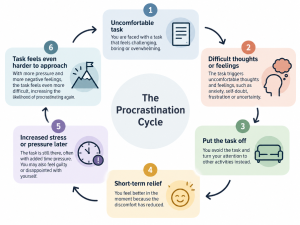
In short, the cycle runs from an uncomfortable task to difficult thoughts and feelings, then to avoidance and short-term relief. Pressure rises, and the task feels harder than before. Over time, procrastination can become a well-practised response to discomfort, even when it makes things harder in the long run.
Is procrastination just laziness?
When you ask yourself, “Why do I procrastinate?”, it is easy to answer, “Because I’m lazy.” However, that explanation rarely fits. Most people who procrastinate care a great deal about the task, and that caring is often what makes starting so uncomfortable.
Procrastination can also go hand in hand with perfectionism or low mood. Therefore, if avoidance is long-standing, talk to your GP or a psychologist about what is driving it.
How to break the procrastination cycle
Knowing the answer to “Why do I procrastinate?” gives you clues about how to interrupt the cycle. The goal is to make it easier to act, even when you don’t feel completely ready.
1. Notice what happens just before you procrastinate
The next time you find yourself reaching for your phone or deciding that a task can wait until tomorrow, pause. What are you thinking about the task? What are you feeling? Over time, recognising what is happening at the moment you want to put something off can make the pattern less automatic.
2. Be curious about your reasons for waiting
Procrastination often comes with convincing reasons to delay, such as:
- “I’m too tired to do this now.”
- “I’ll concentrate better tomorrow.”
- “I should wait until I have enough time to do it properly.”
Sometimes these reasons are completely valid. At other times, they help us justify putting off something uncomfortable. Ask yourself: Is waiting actually going to help, or am I waiting to feel different before I begin?
3. Make the first step smaller
Tasks such as “finish my assignment” or “sort out my finances” can feel daunting before you’ve even begun. Identify the smallest concrete action you could take. For example, you might:
- open the document and write a heading
- find the phone number you need to call
- spend five minutes sorting through a pile of paperwork
In other words, the aim is simply to get started, not to finish everything at once.
4. Start before you feel ready
It’s tempting to wait until you feel energised, motivated or confident. Practise taking a small step while allowing some discomfort to be there. For example, you might start while feeling bored, or make the phone call while feeling anxious.
Rest still matters, and overwhelming distress deserves care. The skill here is becoming more willing to experience the ordinary discomfort that comes with difficult, boring or uncertain tasks. Motivation often follows action, so a task usually feels more manageable once you have started.
5. Drop the self-criticism
After procrastinating, it can be tempting to criticise yourself. You might think, “Why am I so lazy?” or “I’ve wasted the whole day again.” However, making yourself feel worse can make an already uncomfortable task even harder to approach. Acknowledge what happened with understanding and compassion, consider what got in the way, and focus on the next action you can take.
When does procrastination become a problem?
Most of us procrastinate from time to time. It may become more of a concern when it happens frequently, causes significant stress, or starts interfering with things that matter to you. You might notice:
- regularly missing deadlines or opportunities
- becoming overwhelmed as tasks pile up
- feeling an impact on your work, study, relationships or everyday responsibilities

How can a psychologist help with procrastination?
If “Why do I procrastinate?” keeps coming back, it can help to look beyond organisation and discipline. A psychologist can help you understand what is driving the pattern for you and develop strategies to change it. This may include working on perfectionism, fear of failure, low confidence, or difficulty tolerating uncomfortable thoughts and feelings.
Our psychologists use evidence-based approaches such as Cognitive Behaviour Therapy (CBT) and Acceptance and Commitment Therapy (ACT). CBT helps you notice and shift the thoughts and habits that keep avoidance going. ACT builds your willingness to feel discomfort while you take action on what matters to you. In addition, our Care Coordinator can talk through what you are looking for and match you with a psychologist who suits you.
Overcoming procrastination does not mean never putting something off again. The aim is to recognise when avoidance gets in the way. Then you can take action, even when some discomfort comes along for the ride.
Book a free 15-minute call with our Care Coordinator to learn more.
References and Resources
- Sirois, F., & Pychyl, T. (2013). Procrastination and the priority of short-term mood regulation: Consequences for future self. Social and Personality Psychology Compass, 7(2), 115–127.
- Centre for Clinical Interventions. (2025). Procrastination. Department of Health, Western Australia.
- Centre for Clinical Interventions: Procrastination. Free self-help information sheets and workbooks.
- Beyond Blue. Free information and support for anxiety and low mood.
Disclaimer: This article is for general informational purposes only and is not a substitute for individual psychological advice, assessment, or treatment. Reading this content does not establish a therapeutic relationship. If you have concerns about your mental health, please seek support from a registered health professional.